Introduction
Affiliate Marketing Tools help businesses manage, track, and scale partnerships with affiliates who promote their products or services in exchange for commissions. These platforms handle everything from affiliate onboarding and link tracking to commission payouts and performance analytics.
Affiliate marketing has become a core growth channel for many businesses, especially in eCommerce, SaaS, and digital services. With increasing competition and customer acquisition costs, brands are turning to performance-based marketing models where they only pay for results. Modern affiliate tools go beyond tracking—they offer automation, fraud detection, influencer collaboration, and deep analytics.
Common use cases include:
- Managing affiliate programs and partnerships
- Tracking referrals, clicks, and conversions
- Automating commission payouts
- Recruiting and onboarding affiliates
- Monitoring performance and ROI
What buyers should evaluate:
- Tracking accuracy and attribution models
- Affiliate onboarding and management features
- Commission structures and payout automation
- Fraud detection and compliance tools
- Integration with eCommerce and CRM systems
- Reporting and analytics capabilities
- Scalability and performance
- Ease of use and onboarding
- Pricing structure (subscription vs commission-based)
- Customization and white-label options
Best for: eCommerce businesses, SaaS companies, digital product creators, agencies, and enterprises looking to scale performance-based marketing.
Not ideal for: Businesses with low margins, limited tracking infrastructure, or those not ready to manage affiliate relationships.
Key Trends in Affiliate Marketing Tools
- Performance-based growth models: Increasing focus on ROI-driven marketing spend.
- Integration with influencer marketing: Blurring lines between affiliates and creators.
- AI-driven fraud detection: Identifying fake traffic and invalid conversions.
- Multi-touch attribution: More accurate tracking across multiple touchpoints.
- Automation of payouts: Streamlined commission payments across global affiliates.
- First-party tracking solutions: Adaptation to privacy changes and cookie limitations.
- Partnership ecosystems: Platforms expanding into broader partner management.
- Real-time analytics: Instant insights into affiliate performance.
- Custom commission structures: Flexible payouts based on performance tiers.
- Cross-channel tracking: Tracking across web, mobile, and apps.
How We Selected These Tools (Methodology)
The tools listed below were selected based on:
- Market adoption and reputation
- Tracking and attribution capabilities
- Affiliate management features
- Integration ecosystem
- Scalability across SMB and enterprise
- Fraud detection and compliance features
- Ease of use and onboarding
- Reporting and analytics depth
- Support and documentation quality
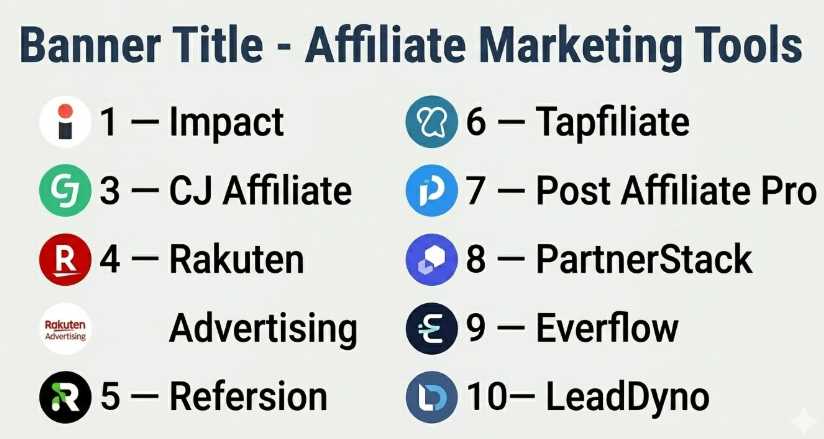
Top 10 Affiliate Marketing Tools
#1 — Impact (Impact.com)
Short description: A leading partnership management platform that supports affiliate, influencer, and strategic partnerships.
Key Features
- Affiliate and partner management
- Multi-channel tracking
- Automation workflows
- Fraud detection
- Analytics and reporting
- Contract and payment management
Pros
- Comprehensive platform
- Strong analytics
- Scalable for enterprises
Cons
- Expensive
- Complex setup
Platforms / Deployment
- Web
- Cloud
Security & Compliance
- Not publicly stated
Integrations & Ecosystem
Impact integrates with a wide range of marketing and eCommerce tools.
- Shopify
- CRM systems
- APIs
Support & Community
Enterprise-level support and onboarding.
#2 — ShareASale
Short description: A well-known affiliate network connecting merchants with a large pool of affiliates.
Key Features
- Affiliate marketplace
- Tracking and reporting
- Commission management
- Merchant dashboard
- Recruitment tools
Pros
- Large affiliate network
- Easy to get started
- Reliable tracking
Cons
- Interface can feel outdated
- Limited customization
Platforms / Deployment
- Web
- Cloud
Security & Compliance
- Not publicly stated
Integrations & Ecosystem
- eCommerce platforms
- APIs
Support & Community
Strong support and affiliate network resources.
#3 — CJ Affiliate (Commission Junction)
Short description: An enterprise affiliate marketing network offering advanced tracking and global reach.
Key Features
- Affiliate network
- Advanced tracking
- Real-time analytics
- Fraud detection
- Global reach
Pros
- Trusted network
- Strong reporting
- Large partner base
Cons
- High entry requirements
- Complex interface
Platforms / Deployment
- Web
- Cloud
Security & Compliance
- Not publicly stated
Integrations & Ecosystem
- APIs
- Enterprise integrations
Support & Community
Enterprise support and resources.
#4 — Rakuten Advertising
Short description: A global affiliate marketing platform offering partnerships, tracking, and campaign management.
Key Features
- Affiliate network
- Campaign management
- Analytics
- Fraud prevention
- Global partnerships
Pros
- Strong global presence
- Reliable tracking
- Enterprise-ready
Cons
- Expensive
- Limited SMB focus
Platforms / Deployment
- Web
- Cloud
Security & Compliance
- Not publicly stated
Integrations & Ecosystem
- APIs
- eCommerce tools
Support & Community
Enterprise-level support.
#5 — Refersion
Short description: An affiliate marketing platform designed for eCommerce brands with easy setup and tracking.
Key Features
- Affiliate tracking
- Commission management
- Recruitment tools
- Analytics
- Integration with eCommerce
Pros
- Easy to use
- Strong eCommerce integrations
- Good onboarding
Cons
- Limited advanced features
- Not ideal for enterprise
Platforms / Deployment
- Web
- Cloud
Security & Compliance
- Not publicly stated
Integrations & Ecosystem
- Shopify
- WooCommerce
- APIs
Support & Community
Good SMB-focused support.
#6 — Tapfiliate
Short description: A user-friendly affiliate tracking and management platform for SaaS and eCommerce businesses.
Key Features
- Affiliate tracking
- Custom commission structures
- Automation
- Reporting tools
- White-label options
Pros
- Easy setup
- Flexible commissions
- Good UI
Cons
- Limited enterprise features
- Smaller ecosystem
Platforms / Deployment
- Web
- Cloud
Security & Compliance
- Not publicly stated
Integrations & Ecosystem
- APIs
- CRM tools
Support & Community
Good documentation and support.
#7 — Post Affiliate Pro
Short description: A feature-rich affiliate marketing software offering tracking, automation, and customization.
Key Features
- Affiliate tracking
- Commission management
- Fraud detection
- Reporting
- Customization tools
Pros
- Highly customizable
- Strong tracking features
- Suitable for various industries
Cons
- UI can be complex
- Setup may take time
Platforms / Deployment
- Web
- Cloud / Self-hosted
Security & Compliance
- Not publicly stated
Integrations & Ecosystem
- APIs
- eCommerce platforms
Support & Community
Strong support and documentation.
#8 — PartnerStack
Short description: A partner ecosystem platform focused on SaaS affiliate and referral programs.
Key Features
- Partner management
- Affiliate tracking
- Automated payouts
- Analytics
- Recruitment tools
Pros
- Great for SaaS
- Strong automation
- Easy onboarding
Cons
- Limited for non-SaaS
- Pricing may be high
Platforms / Deployment
- Web
- Cloud
Security & Compliance
- Not publicly stated
Integrations & Ecosystem
- CRM tools
- APIs
Support & Community
Good support and onboarding.
#9 — Everflow
Short description: A performance marketing platform with advanced tracking and analytics for affiliate programs.
Key Features
- Advanced tracking
- Analytics dashboards
- Fraud detection
- Automation
- Multi-channel tracking
Pros
- Strong analytics
- Scalable
- Modern UI
Cons
- Learning curve
- Pricing complexity
Platforms / Deployment
- Web
- Cloud
Security & Compliance
- Not publicly stated
Integrations & Ecosystem
- APIs
- Marketing tools
Support & Community
Good documentation and support.
#10 — LeadDyno
Short description: A simple affiliate marketing tool designed for small businesses and startups.
Key Features
- Affiliate tracking
- Commission management
- Email notifications
- Reporting
- Integration tools
Pros
- Easy to use
- Quick setup
- Affordable
Cons
- Limited advanced features
- Not scalable for enterprise
Platforms / Deployment
- Web
- Cloud
Security & Compliance
- Not publicly stated
Integrations & Ecosystem
- Shopify
- APIs
Support & Community
Basic support and resources.
Comparison Table (Top 10)
| Tool Name | Best For | Platform(s) Supported | Deployment | Standout Feature | Public Rating |
|---|---|---|---|---|---|
| Impact | Enterprise partnerships | Web | Cloud | Multi-channel partnerships | N/A |
| ShareASale | Affiliate network | Web | Cloud | Large affiliate base | N/A |
| CJ Affiliate | Enterprise | Web | Cloud | Global network | N/A |
| Rakuten Advertising | Enterprise | Web | Cloud | Global partnerships | N/A |
| Refersion | eCommerce SMB | Web | Cloud | Easy setup | N/A |
| Tapfiliate | SMB/SaaS | Web | Cloud | Flexible commissions | N/A |
| Post Affiliate Pro | Customization | Web | Cloud/Self-hosted | Custom tracking | N/A |
| PartnerStack | SaaS | Web | Cloud | Partner ecosystem | N/A |
| Everflow | Performance marketing | Web | Cloud | Advanced analytics | N/A |
| LeadDyno | Small businesses | Web | Cloud | Simplicity | N/A |
Evaluation & Scoring of Affiliate Marketing Tools
| Tool Name | Core (25%) | Ease (15%) | Integrations (15%) | Security (10%) | Performance (10%) | Support (10%) | Value (15%) | Weighted Total |
|---|---|---|---|---|---|---|---|---|
| Impact | 10 | 6 | 9 | 8 | 9 | 9 | 6 | 8.6 |
| ShareASale | 8 | 8 | 7 | 6 | 8 | 8 | 8 | 7.9 |
| CJ Affiliate | 9 | 6 | 8 | 7 | 9 | 9 | 6 | 8.0 |
| Rakuten | 9 | 6 | 8 | 7 | 9 | 8 | 6 | 7.9 |
| Refersion | 8 | 9 | 8 | 6 | 8 | 8 | 9 | 8.3 |
| Tapfiliate | 8 | 9 | 7 | 6 | 8 | 7 | 9 | 8.1 |
| Post Affiliate Pro | 9 | 7 | 7 | 6 | 8 | 8 | 8 | 7.9 |
| PartnerStack | 9 | 8 | 8 | 7 | 8 | 8 | 7 | 8.1 |
| Everflow | 9 | 7 | 8 | 7 | 9 | 8 | 7 | 8.1 |
| LeadDyno | 7 | 9 | 6 | 6 | 7 | 7 | 9 | 7.5 |
How to interpret scores:
- Scores are relative comparisons, not absolute benchmarks.
- Enterprise tools score higher in scalability and analytics.
- SMB tools excel in ease of use and affordability.
- Choose based on program complexity and growth goals.
Which Affiliate Marketing Tool Is Right for You?
Solo / Freelancer
- Best choices: LeadDyno, Tapfiliate
- Focus on simplicity and affordability
SMB
- Best choices: Refersion, Tapfiliate
- Need easy setup and integrations
Mid-Market
- Best choices: PartnerStack, Everflow
- Require automation and analytics
Enterprise
- Best choices: Impact, CJ Affiliate, Rakuten
- Focus on scale, compliance, and global reach
Budget vs Premium
- Budget: LeadDyno, Tapfiliate
- Premium: Impact, CJ Affiliate
Feature Depth vs Ease of Use
- Easy: Refersion, LeadDyno
- Advanced: Impact, Everflow
Integrations & Scalability
- Strong: Impact, PartnerStack
- Moderate: Tapfiliate, Refersion
Security & Compliance Needs
- Stronger: Enterprise tools
- Basic: SMB tools
Frequently Asked Questions (FAQs)
What is an affiliate marketing tool?
It is software that helps manage and track affiliate partnerships and commissions.
How do affiliates get paid?
Through commissions based on sales, clicks, or leads.
Are these tools suitable for small businesses?
Yes, many offer affordable plans for SMBs.
What is affiliate tracking?
Tracking referrals, clicks, and conversions from affiliate links.
Can I automate payouts?
Yes, most platforms support automated payments.
What is fraud detection?
Identifying fake traffic or invalid conversions.
Do these tools integrate with eCommerce platforms?
Yes, most integrate with platforms like Shopify.
How much do they cost?
Pricing varies based on features and scale.
Can I customize commissions?
Yes, many tools support flexible commission structures.
What are common mistakes?
Poor tracking setup, unclear commission structures, and lack of affiliate support.
Conclusion
Affiliate Marketing Tools are essential for scaling performance-based marketing and building strong partner ecosystems. From enterprise platforms like Impact and CJ Affiliate to SMB-friendly tools like Refersion and Tapfiliate, the right solution depends on your business size, goals, and technical requirements.